
Tasmania harvest guide · Reviewed September 2026
Cherry picking is a real seasonal job in Tasmania, but it is concentrated in a short harvest window and is usually best suited to people who already hold legal Australian work rights. Tasmania’s agriculture department lists the cherry season from December to February across the north, north-west and south. Current Horticulture Award rates also protect hourly and piece-rate workers.
1. When is cherry picking season in Tasmania?
Tasmania’s Department of Natural Resources and Environment publishes a seasonal harvest calendar. It currently lists cherries from December through February in the state’s north, north-west and south.
The exact start and finish can change with weather, variety and farm location. Recruitment may begin before fruit is ready, so waiting until peak picking week can mean some employers have already filled their crews.
Official Tasmania harvest calendar
2. What does a cherry picker actually do?
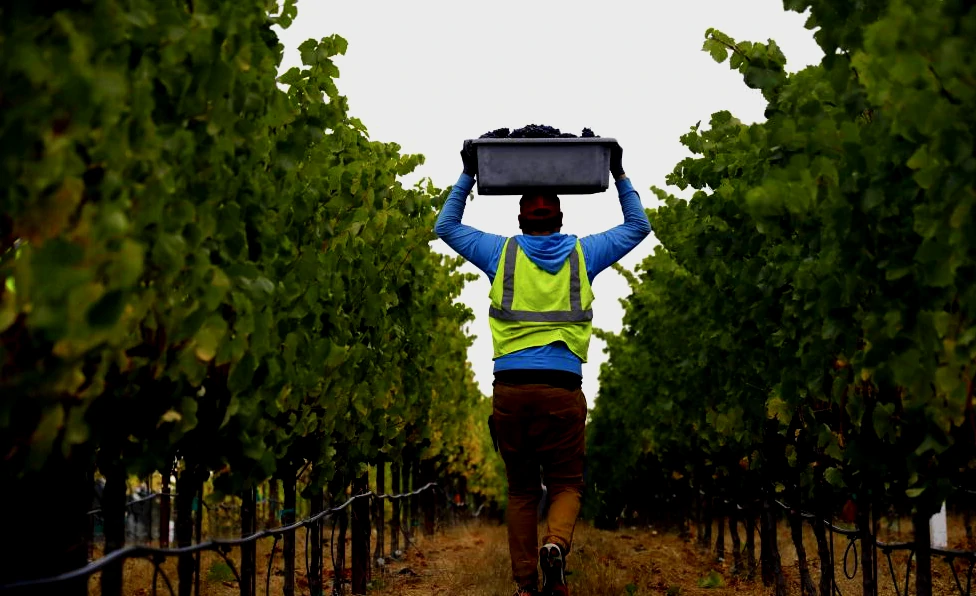
Cherry work can include more than picking fruit from a tree.
Depending on the farm, tasks can include:
- picking cherries carefully into buckets or lugs;
- carrying or emptying containers;
- sorting fruit;
- packing and grading;
- working in orchard rows for long periods;
- following food-safety and quality rules;
- starting early when weather and fruit conditions require it.
The work is physical. You may stand, bend, reach and walk for much of the shift. Some orchards use ladders or picking platforms, while others use lower trees.
3. The season can be short, so hours are not always guaranteed
Harvest work depends on fruit maturity and weather. Rain, heat or crop volume can change daily hours.
Ask the employer how work is scheduled and whether there is a minimum number of hours. Do not plan your entire travel budget around an online claim that every picker works seven days a week for the whole season.
4. How much should cherry picking pay in 2026?
Fruit picking, sorting and packing can fall under the Horticulture Award when that award applies.
From 1 July 2026, Fair Work’s horticulture guidance gives these Level 1 examples:
| Worker type | Minimum ordinary hourly rate |
|---|---|
| Adult full-time / part-time Level 1 | AUD 25.74 |
| Adult casual Level 1 | AUD 32.18 |
Employees with more than three months of experience must progress to Level 2 under the Horticulture Award where the classification applies.
Penalty rates, overtime and higher classifications can change what you should receive.
Check current horticulture pay
5. Can cherry pickers be paid by the bucket or kilogram?
Yes, horticulture piece rates are allowed when the legal rules are followed.
Fair Work says pieceworkers under the Horticulture Award have a minimum wage guarantee. If your piecework earnings for the day are below the guaranteed hourly minimum multiplied by the hours you worked, the employer must make up the difference.
The piece rate also has to be set so a competent pieceworker working at average productivity can earn at least 15% more than the relevant hourly rate.
For a Level 1 casual employee from 1 July 2026, Fair Work gives AUD 32.18/hour as the minimum guarantee and AUD 37.01/hour as the benchmark used when setting the piece rate for an average competent worker.
Piece rate does not mean “no minimum wage”.
Keep your own record of start time, finish time, breaks and the amount you picked. That makes it easier to check the payslip.
6. Which visas can let you pick cherries in Tasmania?
Many seasonal workers use a Working Holiday Maker visa—subclass 417 or 462—when their passport, age and other eligibility rules allow it.
Other people may already have Australian work rights through a student, partner, skilled, bridging or other visa. Always check the conditions on your own visa in VEVO.
A cherry vacancy does not create visa eligibility by itself.
Working Holiday same-employer rule
Working Holiday Maker condition 8547 normally limits work with one employer to six months.
However, Home Affairs currently provides an exemption for plant and animal cultivation anywhere in Australia, including harvesting and packing fruit and vegetables. That means qualifying cherry work can be exempt from the six-month limit.
Check your visa grant and current Home Affairs guidance because program settings can change.
7. Does cherry picking count as specified work?
Some regional plant and animal cultivation can count as specified work for eligible Working Holiday Maker holders seeking a second or third visa.
The exact rule depends on subclass, location and type of work. Do not assume every packing-shed or orchard job automatically counts.
Use Home Affairs’ current specified-work guidance and keep evidence such as payslips, employer details and tax records.
8. Where to find real Tasmania harvest work
The Tasmania Government harvest-jobs page publishes seasonal produce information and links workers to job-search resources.
You can also check:
- orchard and fruit-company websites;
- Workforce Australia and other national job sources;
- established recruitment agencies;
- local harvest and agriculture job networks.
Apply before the peak if possible, but verify that the farm is real before sending identity documents.
Tasmania harvest information
9. Housing and transport can decide whether the job is worth it
Many orchards are outside major city centres. A job with a good hourly rate can still be difficult if accommodation is expensive or you have no reliable way to reach the farm before an early shift.
Ask before accepting
- exact orchard location;
- start date and estimated end date;
- hourly rate or piece rate;
- casual or other employment status;
- expected hours;
- whether weather cancellations are common;
- accommodation options and weekly cost;
- transport to the orchard;
- any lawful deductions;
- equipment or clothing you must provide.
10. Tax and payslips
Seasonal workers should be paid through a lawful payroll arrangement and receive payslips. Your tax treatment can depend on your visa and tax residency.
Use the Australian Taxation Office for tax information rather than accepting a recruiter’s promise that “farm work is tax free”.
11. Cherry-picking scam warning signs
- payment to reserve a picking position;
- no real orchard name or address;
- an unusually high guaranteed weekly income;
- a promise of automatic Australian permanent residence;
- a recruiter says the farm can give any nationality a Working Holiday visa;
- cash-only work with no payslips;
- accommodation deductions that are not explained before arrival;
- a fake job advert using photos from a real farm.
Verify the employer independently and understand your work rights before travelling.
12. What to bring for orchard work
The employer should tell you what is required. Practical items can include suitable closed footwear, weather protection, water, sun protection and clothing suitable for early mornings and outdoor work.
Do not buy expensive tools or equipment from a recruiter unless the real employer has confirmed they are required.
Frequently asked questions
When is cherry season in Tasmania?
Tasmania’s official harvest calendar lists cherries from December to February in the north, north-west and south.
What is the casual minimum hourly rate for Level 1 horticulture in 2026?
Fair Work lists AUD 32.18/hour from 1 July 2026 for adult Level 1 casual employees under the Horticulture Award.
Can an employer pay only by piece rate?
Piece rates are allowed when the Horticulture Award rules are met, including the minimum wage guarantee for pieceworkers.
Can I work for one orchard for more than six months on a Working Holiday visa?
Home Affairs currently exempts plant and animal cultivation work, including fruit harvesting and packing, from the normal six-month same-employer limit.
Does cherry picking provide visa sponsorship?
Ordinary seasonal cherry picking is generally not the same as a skilled employer-sponsored visa role. Most workers need to hold work rights through another visa such as an eligible Working Holiday Maker visa.
Official sources used for this guide
- Tasmania NRE — Harvest Jobs
- Tasmania NRE — Seasonal Produce Harvest Dates
- Fair Work Ombudsman — Horticulture pay and piece rates
- Home Affairs — 6-month work limitation
- Home Affairs — WHM specified work and conditions
Guide Travel note: Harvest dates, weather, vacancy numbers and visa settings can change. Confirm the live job and your work rights before travelling to Tasmania.