
Schengen travel guide · Reviewed September 2026
The Schengen Area has 29 countries in 2026. Bulgaria and Romania are now full members, the Entry/Exit System is fully operational, and ETIAS is still not live yet. This guide explains what a Schengen visa actually allows, how the 90/180-day rule works, and what travellers need to check before a trip.
1. Which countries are in the Schengen Area in 2026?
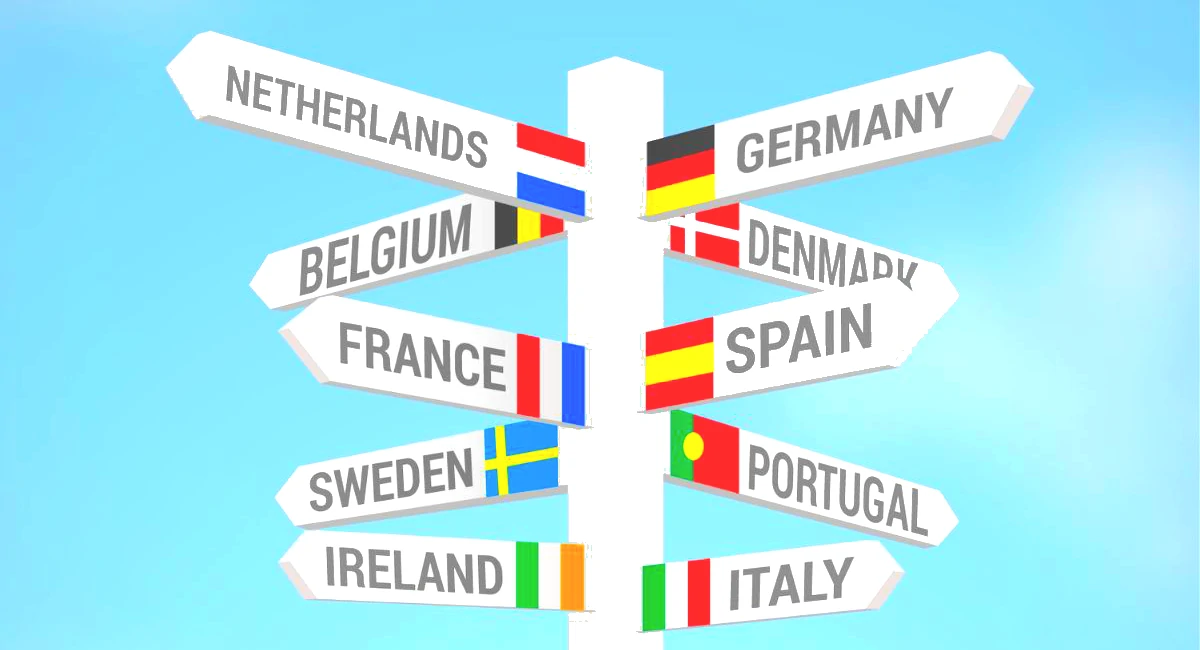
The European Commission says the Schengen Area now has 29 countries: 25 EU countries plus Iceland, Norway, Switzerland and Liechtenstein.
- Austria
- Belgium
- Bulgaria
- Croatia
- Czechia
- Denmark
- Estonia
- Finland
- France
- Germany
- Greece
- Hungary
- Iceland
- Italy
- Latvia
- Liechtenstein
- Lithuania
- Luxembourg
- Malta
- Netherlands
- Norway
- Poland
- Portugal
- Romania
- Slovakia
- Slovenia
- Spain
- Sweden
- Switzerland
Cyprus participates in parts of Schengen cooperation, but internal border controls have not yet been fully lifted. Ireland is not part of the Schengen Area.
2. What does a Schengen visa allow you to do?
A standard short-stay Schengen visa is for visits of up to 90 days in any 180-day period. It is commonly used for tourism, family visits, business visits and other short stays, depending on the visa purpose.
A Schengen visa is generally valid across the Schengen Area, but the visa sticker itself can contain limits. Always check:
- the start date;
- the expiry date;
- the number of entries;
- the allowed duration of stay;
- whether the territorial validity is limited.
A short-stay Schengen visa does not give you a general right to take a job or live permanently in Europe. Work and long stays are governed by national immigration rules.
3. How does the 90 days in any 180 days rule work?
The rule is rolling. On any day you are in the Schengen Area, you look back at the previous 180 days and count how many days you spent in the area.
Your total short-stay presence must normally not exceed 90 days in that 180-day period.
Simple example
If you spend 60 days in Schengen, leave, and later return, you do not automatically receive a new 90 days. Your earlier 60 days still count until they fall outside the rolling 180-day window.
The European Commission provides an official short-stay calculator. This is safer than guessing with a simple “three months in, three months out” rule.
Open the official Schengen short-stay calculator →
4. Does travelling between Schengen countries reset the clock?
No. Moving from France to Spain, Germany to Italy, or another trip inside Schengen does not create a new 90-day allowance. The 29 countries are counted together for the short-stay rule.
That is why long multi-country trips need careful date planning.
5. Passport validity rules for a Schengen short stay
Under the Schengen Borders Code, a third-country traveller’s passport normally needs to:
- be valid for at least 3 months after the intended departure from the Schengen Area;
- have been issued within the previous 10 years.
Visa application centres may also require blank passport pages for the visa and processing.
A passport can have an expiry date in the future and still fail the Schengen issue-date rule if it was issued more than 10 years before entry.
6. What changed with the Entry/Exit System (EES)?
The EU Entry/Exit System started a progressive rollout on 12 October 2025 and became fully operational on 10 April 2026.
EES records short-stay border movements for non-EU nationals. At the external Schengen border, the system can record:
- travel-document information;
- entry and exit data;
- facial image;
- fingerprints where applicable;
- refusals of entry.
This replaces the old reliance on manual passport stamping for travellers covered by the system.
EES is not a visa. You do not apply for it like a Schengen visa.
7. Is ETIAS active now?
No—not yet as of September 2026.
The European Commission says ETIAS is scheduled to start in the last quarter of 2026, but the exact start date will be officially announced. The official ETIAS page still states that applications are not being collected at this time.
ETIAS will apply mainly to visa-exempt travellers going to participating European countries for short stays. It is not a replacement for a Schengen visa for travellers who already need one.
If a website is currently selling you a completed ETIAS authorisation before the official system opens, treat it as a warning sign. Use only the future official EU website or app when the system is launched.
8. Schengen visa vs ETIAS vs EES
| System | What it is | Current status |
|---|---|---|
| Schengen visa | Visa for travellers who need a visa for a short stay | Active |
| EES | Digital entry/exit border registration system | Fully operational since 10 April 2026 |
| ETIAS | Travel authorisation for eligible visa-exempt travellers | Not yet operational as of September 2026 |
9. Which country should you apply to for a Schengen visa?
Do not simply apply to whichever country has the fastest appointment if it is not your real destination.
The correct consulate depends on your actual trip. In general, you should apply to the country that is your main destination. If there is no clear main destination and the stay is equal across countries, the first-entry rule may be relevant.
Use the official instructions of the country responsible for your trip because local application providers, appointment systems and supporting-document details differ.
10. What documents are commonly checked?
The exact checklist depends on your nationality, location and reason for travel. Common areas include:
- valid passport;
- application form;
- photo;
- travel medical insurance where required;
- accommodation;
- transport or travel plan;
- proof of financial means;
- evidence explaining the purpose of travel;
- evidence that supports your intention to leave before the authorised stay ends.
Do not copy another person’s bank balance or itinerary. Your documents should fit your own trip.
11. What can border officers ask even if you have a visa?
A visa does not create an unconditional right to enter. Border authorities may still check whether entry conditions are met.
Keep important travel documents accessible, such as your accommodation information, return or onward travel plan, insurance and evidence of funds when relevant.
12. Internal border checks can still happen temporarily
Schengen normally removes routine checks at internal borders, but countries can temporarily reintroduce internal border controls under specific legal conditions.
Carry your valid travel document during cross-border travel even when you do not expect a passport booth between two Schengen countries.
Frequently asked questions
Are Bulgaria and Romania in Schengen now?
Yes. They are full members of the Schengen Area. The European Commission lists both among the current 29 countries.
Is Cyprus in Schengen?
Not fully. Cyprus participates in Schengen cooperation, but internal border controls have not yet been fully abolished.
Is Ireland in Schengen?
No. Ireland is not part of the Schengen Area.
Can I visit all 29 countries with one Schengen visa?
A standard Schengen visa is generally valid for the area, but you must check the territorial validity, dates, entries and duration printed on your specific visa.
Does a multiple-entry visa mean unlimited days?
No. Multiple entry lets you enter more than once during the visa’s validity, but the allowed days and the 90/180 rule still apply.
Is ETIAS required today?
Not yet as of September 2026. The EU says it is expected to start in the last quarter of 2026, with the exact date to be announced officially.
Official sources used for this guide
- European Commission — Schengen Area
- European Commission — Visa policy
- European Commission — Short-stay calculator
- European Commission — EES and ETIAS
- EUR-Lex — Schengen Borders Code
Guide Travel note: Border systems, appointment rules and visa procedures can change. Check the responsible government’s official page again before travel.