
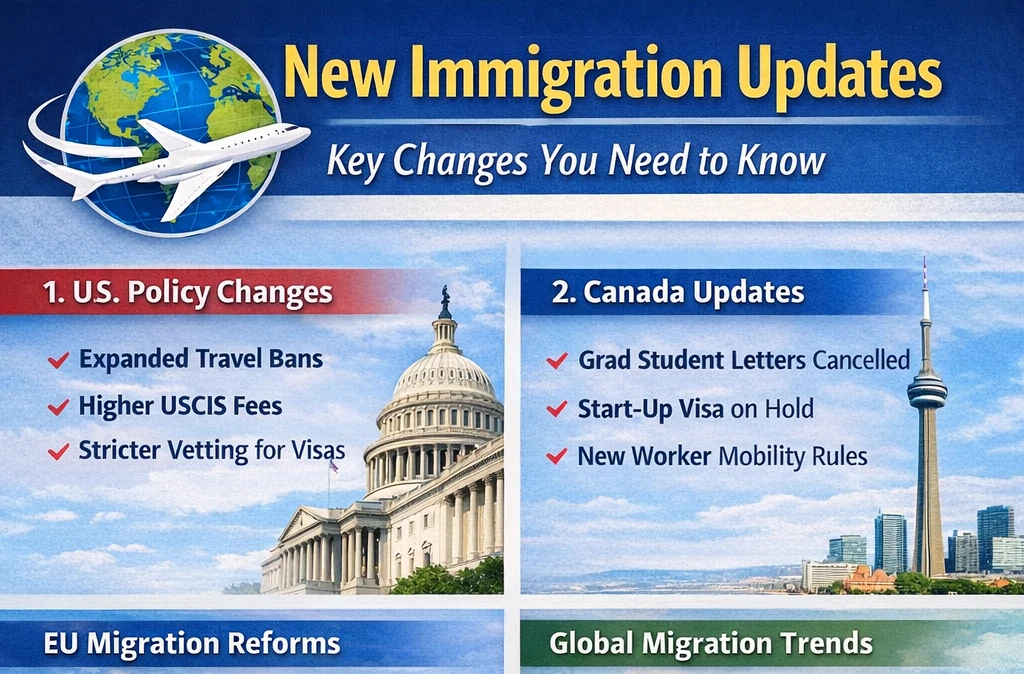
In 2026, global immigration landscapes are shifting rapidly, reflecting deep changes in immigration policy, legal frameworks, enforcement practices, and visa systems. This article highlights key updates around the world — particularly in the United States, Canada, Europe, and global trends — that every prospective migrant, student, worker, or family member should understand.
1. Major U.S. Immigration Policy Changes in 2026
The United States continues to overhaul its immigration policy with broad executive actions, proclamations, and administrative rules that affect millions of applicants worldwide.
a. Expanded Travel Bans & Entry Restrictions
- Presidential Proclamation 10998 expanded travel restrictions to 39 countries plus holders of Palestinian Authority documents effective January 1, 2026.
- These restrictions mean increased vetting for visa applicants and altered eligibility for many nationals.
b. Increased USCIS Fees and New Vetting Procedures
- USCIS has raised filing fees for key services like work authorization (EAD) and introduced enhanced vetting requirements including biometric tracking and mandatory social media disclosures for certain visa categories.
c. Employment Visa Reforms
- The H-1B lottery system now uses a weighted selection process favoring higher-paid beneficiaries, effective February 27, 2026.
- Proposed updates to prevailing wage rules may raise salary thresholds for employment visas, impacting employers and foreign workers.
d. Deportation Enforcement & Legal Changes
- Laws like the Laken Riley Act require mandatory detention of non-citizens accused of certain criminal offenses, expanding enforcement priorities.
2. Canada: Updated Immigration Pathways in 2026
Canada’s immigration system experienced significant regulatory shifts starting January 1, 2026:
- The IRCC (Immigration, Refugees and Citizenship Canada) permanently cancelled PAL/TAL letters for master’s and PhD students.
- Start-up visa applications for entrepreneurs are temporarily suspended while new programs are developed.
- New rules govern interprovincial worker mobility, especially between Ontario and Alberta.
These changes reflect Canada’s commitment to streamline education and work-based immigration while tackling labor market needs.
3. Europe: EU Migration and Asylum Reforms
The European Union’s New Pact on Migration and Asylum is scheduled to take effect in mid-2026:
- The pact creates stricter controls on asylum procedures, enforcement of border security, and mechanisms for sharing responsibility among EU member states.
- It marks one of the most sweeping reforms in EU migration law in decades.
In addition, many EU countries have tightened asylum acceptance criteria due to political and humanitarian pressure.
4. Global Trends: Economic and Policy Impacts
Global migration flows are responding to policy changes as well as economic incentives:
a. Net Migration Trends
Recent economic research suggests that net migration to the U.S. may be near zero or even negative in 2026, a first in decades.
This shift could suppress labor force growth and reduce consumer spending, affecting economic performance across sectors.
b. Policy Balance Between Security and Labor Needs
Many countries are trying to balance border security and economic labor requirements, encouraging high-skilled migrants while restricting low-skilled flows.
5. What This Means for You
a. For Visa Applicants
- Check travel ban lists early — policies change regularly and can affect your eligibility.
- Prepare for higher fees and stricter vetting as agencies tighten requirements.
- If applying for employment visas, understand new wage and lottery systems.
b. For Students & Workers
- Canadian educational pathways are changing — gather accurate, up-to-date information before applying.
- Skilled workers targeting U.S. visas should prepare for a competitive and costly landscape.
c. For Families and Asylum Seekers
- Asylum procedures in the U.S. and Europe are stricter, with faster processing but more denials.
- If you are already in a process, legal advice from certified immigration lawyers can make a crucial difference.
Conclusion
The immigration environment in 2026 is one of the most dynamic in recent history. From expanded travel bans and fees in the U.S., to policy reforms in Canada and Europe, and global shifts in migration flows, this year demands that applicants stay informed, plan ahead, and seek reliable legal guidance.
Staying updated is essential — not only to maximize opportunities but also to avoid procedural pitfalls that can delay or derail your migration goals.